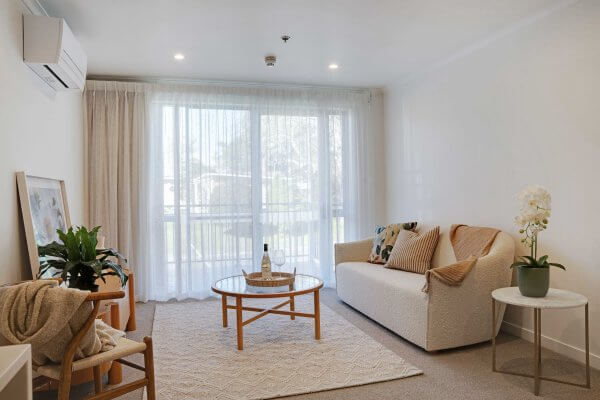
Moving into a Retirement Village apartment can be an opportunity to rethink what you want from your home. Perhaps you’d like somewhere easier to look after, a more connected community, or a home that better suits how you want to spend your time.
Modern retirement apartments can offer all of this while still giving you the privacy and independence of having your own place. You can settle into your own routines, head out when you please and enjoy village life as much or as little as you like.
If you are starting to explore your options, knowing what retirement apartment living involves can help you decide whether it feels right for you.
What is a Retirement Village apartment?
A Retirement Village apartment is a private home located within a wider retirement community. While layouts, sizes and features differ between villages, retirement apartments are designed with easy living in mind, combining comfort, convenience and low-maintenance living so you can spend more time enjoying your home and doing the things you love.
You’ll have a private home of your own, with a kitchen, bathroom, one or more bedrooms, and comfortable living and dining spaces. Depending on the village and apartment, you may also have a balcony or patio, additional storage and car parking.
The key difference is what sits beyond your apartment. Choosing a retirement home in a village gives you the opportunity to be part of an established community, often with shared spaces, activities and amenities available when you choose to use them.
What are retirement apartments like inside?
If you haven’t visited modern retirement properties recently, you may be surprised by how much choice there is.
Contemporary retirement apartments are designed to feel just like any other quality home. Open-plan living, modern kitchens, well-appointed bathrooms and generous natural light can all be part of the experience. Practicality matters too. Depending on the property, features may include easy-access showers, lifts between floors and thoughtful layouts that make it easier to move around your home.
If you can, it’s worth viewing several apartments in person. Floor plans and photographs help, but walking through a property gives you a much better sense of its outlook, natural light, storage, layout, and overall feel.
Will I still have my independence and privacy?
Absolutely. One of the biggest misconceptions about moving into a Retirement Village is that you give up your independence. In an apartment, your home remains your own private space. You decide how you spend your day, when you come and go, who you invite over and how involved you want to be in village life.
That balance can be particularly appealing. You can enjoy quiet time at home when you want it, while knowing neighbours, activities, and shared spaces are nearby when you want to be more social. For people moving from a larger family home, it can offer a welcome mix of independence and connection without the same responsibility of maintaining a standalone property.
What facilities can I expect?
Facilities vary from one Retirement Village to another. Depending on the community, you may find shared lounges, dining areas, landscaped gardens, libraries, pools, fitness facilities and spaces for activities or events. It can be tempting to compare villages by counting amenities, but remember that a longer list doesn’t necessarily mean a better fit.
Think About How You Actually Spend Your Time
Consider what would add something enjoyable to your week. Perhaps you’d like having an inviting place nearby to meet other residents. Maybe gardens and outdoor areas matter more, or you’d appreciate facilities that support an active lifestyle and wellbeing services. The right village is one where everything comes together, from a home you love and quality facilities to surroundings that suit the way you want to live.
What happens to home maintenance?
For many people, one of the real pleasures of moving to a retirement apartment is leaving behind some of the work that comes with maintaining a larger property. Lawns, gardens, exterior upkeep and that list of jobs waiting for the weekend can take up more time and energy than you realise.
A lower-maintenance home gives you some of that time back. Instead of planning your weekend around what needs doing around the property, you have more freedom to decide what you’d actually like to do with it. That might mean travelling more often, spending more time with family and friends, heading out for the day, or simply enjoying a quiet morning at home with nothing that needs your attention.
What maintenance is covered will vary by village and agreement, so it’s worth asking what’s included and what remains your responsibility. The important thing is understanding what a move could free you from, and what it could free you up to enjoy.
Is apartment living good for a lock and leave lifestyle?
If travel is part of how you want to spend your retirement, a retirement apartment can make heading away feel that little bit easier. You can pack your bags and focus on the trip ahead rather than what needs doing while you’re gone.
Whether you’re escaping somewhere warmer for a few weeks, visiting family around New Zealand or planning a longer overseas adventure, Retirement Village living can give you a comfortable home base to return to.
For keen travellers, that ability to enjoy life beyond the village and come back to a home that’s easier to manage can seal the deal.
What should I consider when choosing an apartment?
The apartment itself matters, but so does everything around it. Try to imagine living there every day rather than viewing the property purely as you would an ordinary house for sale.
Consider the location within the village. Is it close to the facilities you would use regularly? Does the outlook appeal to you? How much sun does it receive? Is there enough storage for the things you want to bring with you?
It is also worth thinking beyond the village gates. Access to shops, cafés, healthcare, public transport, friends and family may all influence how well a location works for you. Take your time and ask plenty of questions. Comparing more than one community can help you understand which features matter most to you.
What costs should I understand before moving in?
The financial arrangements for Retirement Village living differ from buying a conventional residential property, so it is important to understand them before deciding.
Ask for a clear explanation of the entry costs, ongoing village fees and any charges that apply when you leave. You should also understand the legal arrangement under which you occupy the apartment and what your regular fees include.
Retirement villages in New Zealand provide disclosure documentation containing important information about the village and its financial arrangements. Independent legal advice is also an important part of the process before entering into an agreement. Taking time to understand the numbers makes it much easier to compare your options with confidence.
What if my needs change in the future?
It is natural to think about what life might look like several years from now, even if you are healthy and independent today.
When comparing retirement apartments, ask what other living and care options are available within the community or wider organisation. Understanding these options can reassure you as you plan ahead.
This doesn’t mean choosing your new home based solely on what you might need one day. It is about finding somewhere that suits the life you want now while understanding the choices that may be available later.
Finding the right retirement apartment for you
There is a lot to consider when choosing your new home, but the decision should ultimately come back to how you want your retirement to look and feel.
At Oceania, our retirement communities offer a range of living options designed for different lifestyles, locations and preferences. Visit our Find a Location page to explore Oceania villages throughout New Zealand and find a retirement apartment that feels like home to you.